



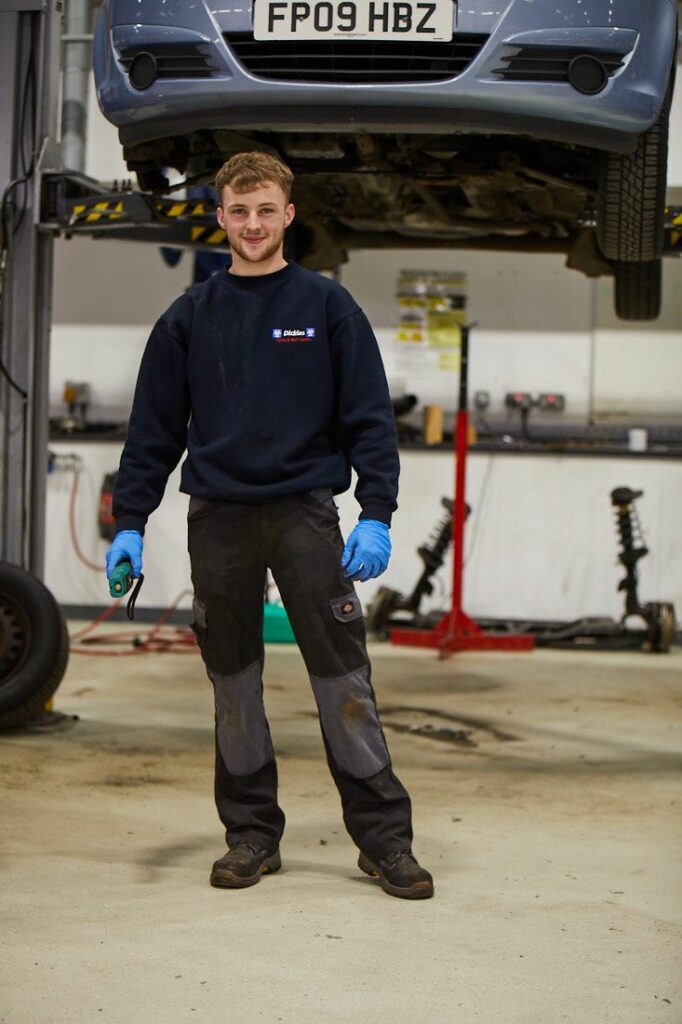
What Our Students Say
Did you know!
- English and maths will be built into your course if your grades are below 4.
- By 2024, the vehicle technician, mechanic and electrician labour market in Leeds is predicted to grow by 5.3%. (EMSI, 2019)
Course Information
Introduction
Develop practical skills in vehicle body repair, surface preparation and refinishing while learning how damaged vehicles are prepared, repaired and restored.
Overview
This Level 1 programme provides an introduction to the vehicle accident repair industry and is designed to help you develop the practical skills and technical knowledge needed to progress further in the sector.
You will take part in hands-on workshop activities and develop skills in vehicle preparation, minor body repair, paint preparation and refinishing. You will also learn how to use tools, materials and equipment safely and professionally.
Alongside practical skills, you will develop your understanding of workshop practices, customer expectations and the standards required within a modern accident repair environment.
The course provides a strong foundation for progression to a Level 2 Vehicle Accident Repair programme, an apprenticeship or further automotive study.
Who is this course for?
This course is ideal for learners who are interested in vehicle body repair, paintwork and automotive refinishing and want to develop practical workshop skills.
It is particularly suited to learners who enjoy hands-on work, have an interest in vehicles and want to explore a future career within the vehicle accident repair or wider automotive industry.
Course units/modules
Learners will develop introductory knowledge and practical skills in areas such as:
- Health and safety in the automotive workshop
- Vehicle body and panel preparation
- Minor body repair techniques
- Surface preparation
- Paint preparation and refinishing
- Cosmetic vehicle repair
- Use of fillers and repair materials
- Safe use of hand tools and workshop equipment
- Basic vehicle systems
- Professional workshop practices
Benefits and skills
Learners will develop:
- Practical vehicle body repair skills
- Surface preparation and refinishing techniques
- Safe use of workshop tools and equipment
- Paint preparation and cosmetic repair skills
- Attention to detail and quality control
- Professional workshop behaviours
- Communication and employability skills
- A foundation for progression to Level 2 study
Entry requirements
You will normally need a minimum of Grade 3 in both GCSE English and GCSE Maths.
You will also be required to complete an assessment and interview prior to enrolment.
Entry decisions are based on your qualifications, interview and assessment performance. Discretion may be applied where the curriculum team believes there is sufficient evidence that you are suitable for the programme.
Available apprenticeships and progression options
Successful completion can support progression to a Level 2 Vehicle Accident Repair programme, an automotive apprenticeship or further study within the motor vehicle sector.
Potential future career routes include Vehicle Paint Technician, Automotive Refinisher, Body Repair Technician and other roles within the vehicle accident repair industry.
Assessment types
Assessment will include practical workshop activities, coursework and assessment of the technical knowledge and skills developed throughout the programme.
Employment Statistics
-
Vehicle technicians, mechanics and electricians
Average Salary£29,640
-
Electrical service and maintenance mechanics and repairers
Average Salary£36,400
-
Mechanical engineers
Average Salary£47,320
Follow us on Social Media