Course Information
Introduction
If you would like to make a difference in someone’s life and dream of a career in the care sector, this course is for you. You will be taught by industry experts and will gain an introduction to health, social care, and children’s and young people’s settings.
Overview
If you would like to make a difference in someone’s life and dream of a
career in the care sector, this course is for you. You will be taught by
industry experts and will gain an introduction to health, social care, and
children’s and young people’s settings.
Video Transcript
Print
Download
Fullscreen
Discover Health & Social Care at Leeds City College | Social Science
WCAG 2.1 Doc
Location: Quarry Hill Campus
SPEAKERS
Female Speaker 1 — Student
Female Speaker 2 — Student
Female Speaker 3 — Student
Female Speaker 4 — Staff
VIDEO BREAKDOWN
Visual: A group of public services and health students look out from the back of an open ambulance parked outside the Quarry Hill Campus. The video cuts to a classroom where a tutor in a green paramedic uniform presents to attentive students.
Female Speaker 1 — Student: “I want to be able to help people who may feel like they can’t be helped or feel like they don’t deserve the help. I’ve learned that you don’t always see what somebody has going on in their life.”
Visual: A student sits in a sensory room holding a large, reflective silver sphere, while nearby students engage in practical classroom exercises and anatomical study.
Female Speaker 1 — Student: “They just simple things really, but then obviously health and social care can be about helping people through big things and like things that are quite detrimental.”
Visual: Students fit protective equipment and work with interactive touchscreen kiosks in a clinical suite.
Female Speaker 2 — Student: “It covers a whole array of human development from pre-cradle right through to old age. In a way, it’s catered for everyone, I think.”
Visual: A student wears a yellow geriatric simulation suit and uses a walking cane under tutor supervision.
Female Speaker 2 — Student: “There’s so many components that you’re going to find one that you like. And I think that’s what I have found the most with this course is that it’s for everyone.”
Visual: Students examine case study notes and work with culinary ingredients in a modern training kitchen.
Female Speaker 3 — Student: “We are so, so lucky. So we’ve got the hands-on facilities, we’ve got clinical, practical clinical suite. We’ve got an anatomy table, we’ve got hoists,”
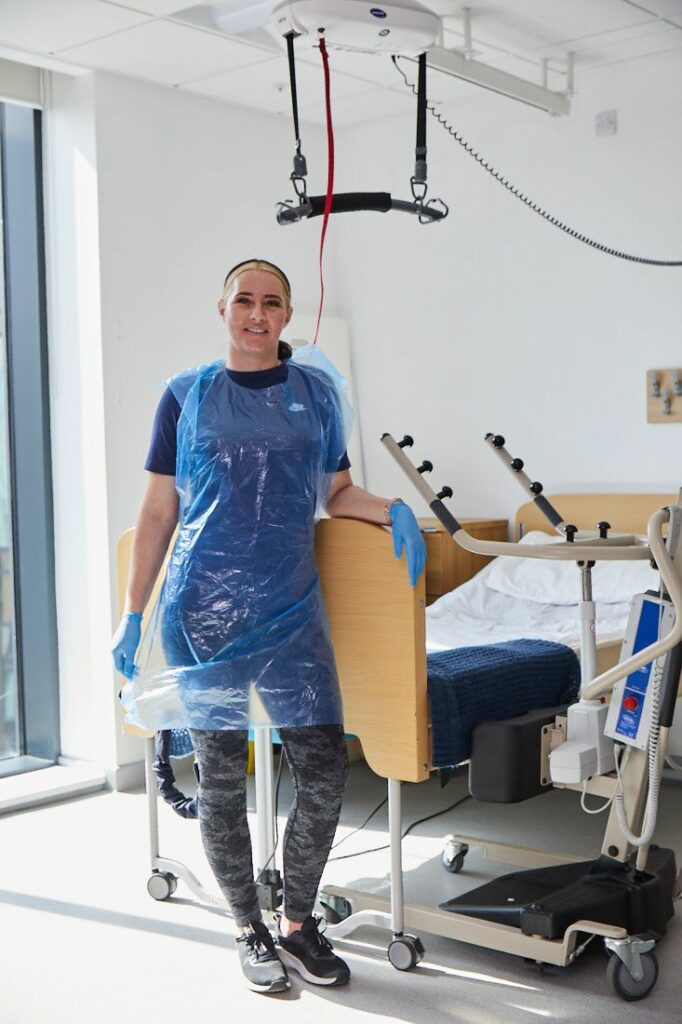
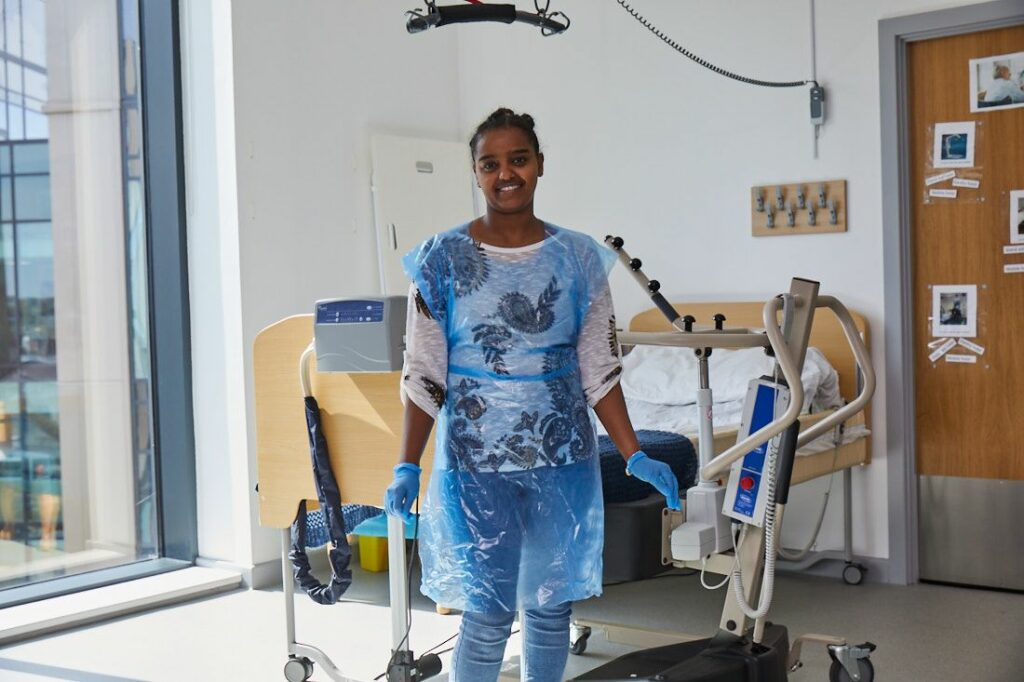
Visual: Students practice operating an overhead ceiling hoist over a hospital bed in a mock ward setting, then interact with a life-like baby mannequin.
Female Speaker 3 — Student: “we’ve got VR headsets, interactive babies. They have stuff where you can get hands-on experience even if you’re not on placement. So we can be creative…”
Visual: Students look through microscopes in a science laboratory while others engage in creative art therapy tasks.
Female Speaker 4 — Staff: “…as we wish, within our teaching and learning, we are following what employers need locally. So a college course like this is perfect in preparing people, giving them the basics of being able to provide care, compassion, talk to people…”
Visual: An ambulance is parked on campus as a paramedic tutor demonstrates emergency equipment to students outside and inside the vehicle.
Female Speaker 4 — Staff: “…by being able to use transferable skills from different placements and dealing with different people in different age groups, allows you to build on the foundations you learn in college course to be able to then take it out into practice.”
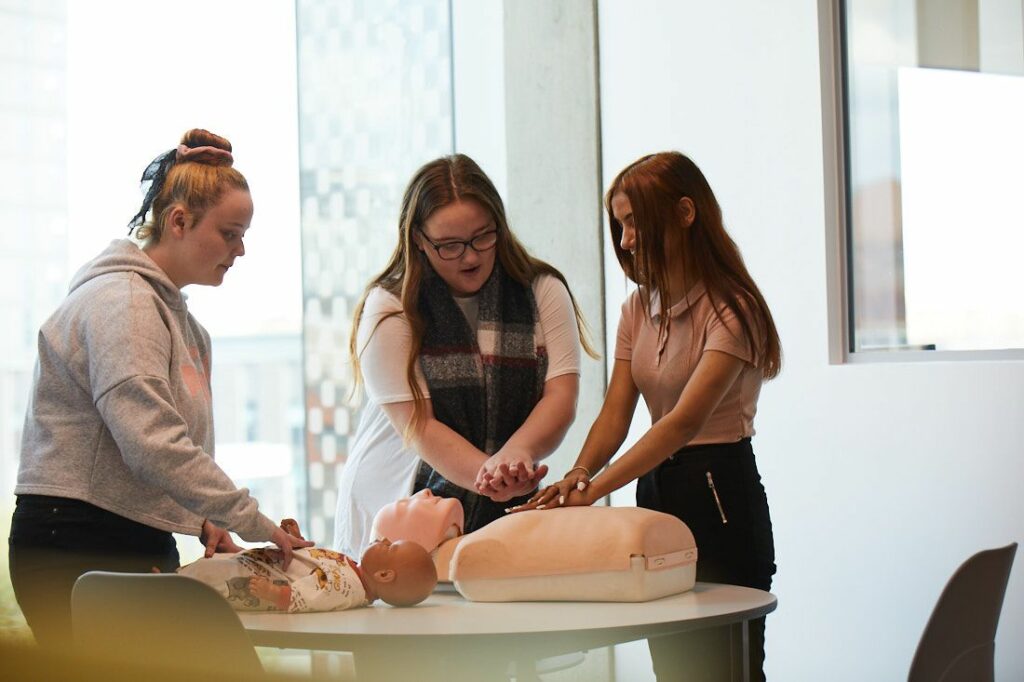
Visual: Tutors demonstrate medical equipment, CPR techniques on an interactive training station, and mobility hoists in a simulated care suite.
Female Speaker 1 — Student: “One of my favorite parts of my course was that I just enjoyed spending time with the teachers and them teaching me.”
Visual: A lecturer teaches at an interactive whiteboard in a classroom while other instructors guide practical work in clinical rooms.
Female Speaker 2 — Student: “The tutors here are like really sweet. Even the ones who aren’t my tutors will still like come up and ask how I’m doing and stuff. So helpful, like you could, no question is too silly. They’ll always be there to help you.”
Visual: Students interact with tutors in soft sensory environments and clinical skill suites.
Female Speaker 2 — Student: “Um and it helps with the learning because when you have that relationship with them, it’s kind of like just an understanding and mutual understanding that what you’re here to do, they just they understand, they get you. So college has really, really helped with like me working out how I’m actually going to get into…”
Visual: Students engage in laboratory work, sensory light therapy, and virtual reality simulations.
Female Speaker 2 — Student: “…on a lunch break. The college has helped with me finding my options. I would say definitely come to like an open event or any sort of open days that they have because they are very good and they are very like true to what a day, a normal day would look like at college.”
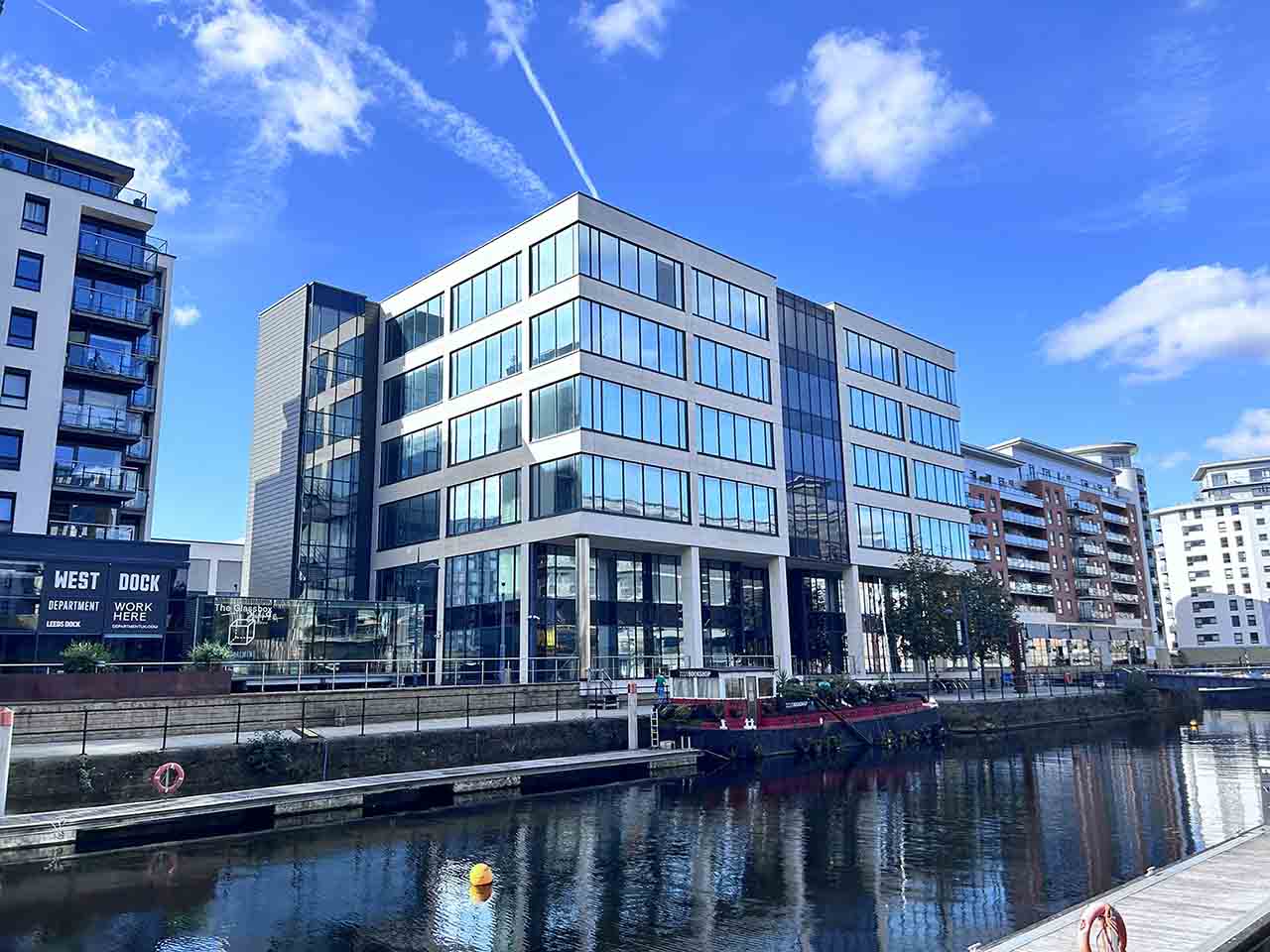
Visual: Low-angle exterior shot of the glass facades of Quarry Hill Campus under a clear blue sky, followed by students walking through hallways and collaborating in study lounge areas.
Female Speaker 4 — Staff: “We’re really fortunate. Sounds a bit cliché, but we get young people who are leaving school and then we see them as young adults ready to go in the world. Just to watch that growth and the confidence and their life skills develop.”
Visual: Students wear Meta Quest VR headsets with controllers in an immersive classroom, operate ceiling hoists, and examine slides through laboratory microscopes.
Female Speaker 4 — Staff: “So we use what’s called restorative practice and that is the heart of what our ethos is. We are all about giving second chances. It’s about nurturing talent, it’s about nurturing individuals and it’s about working with those individuals to get the best outcome possible.”
Visual: A close-up shot of a glowing blue sensory light orb being held in a sensory room transitions to a green screen displaying official department branding.
On-screen text & Graphics: SCHOOL OF SOCIAL SCIENCE LEEDS CITY COLLEGE
Who is this course for?
This course is for 19+ students.
If you’re an adult learner (19+) with low qualifications, or if you’ve been
out of education for a while – this course is perfect for giving you an
introduction to Health and Social Care.
The course is also ideal if you’re already working in the Health and Social
Care sector and want to upskill.
Course units/modules
Your study will cover the following units/modules:
- MU1.6 Communication
- CFC 15 Human growth development
- OP1.6 Physical Disability
- PWCS 04 Health and safety
- PWCS 05 Person-centred support
- MU1.2 Principles and values
- PWCS 03 Equality and Diversity
- Mu1.1 Service provisions
- MU1.4 Safeguarding
- Unit 11 Job opportunities
- HSC CYP1 Awareness of Bereavement in Health and social care
- OP1.9 Dementia
- OP1.8 Mental Health awareness
- OP1.14 Encouraging Healthy Eating
Benefits and skills
You will gain industry insight from your experienced tutors. In addition, you
will develop skills in caring for others.
By the end of this course, you will also understand the responsibilities of
working as a professional in a care environment.
Entry requirements
To study this course you will need Entry level 3 in Maths and English or
equivalent, learners without the grade requirements or international
qualifications will be assessed for literacy and numeracy levels.
You will need to be able to work towards GCSE grade 1.
You will also need to complete a successful interview and demonstration of
appropriate sector care values.
Available apprenticeships and progression options
Upon successful completion of this course and achieving a Grade 3 in GCSE in English and Maths, you might progress onto either Level 2 Extended diploma in Health and Social Care, or Level 2 Access to Higher Education.
Assessment types
Coursework.



Follow us on Social Media